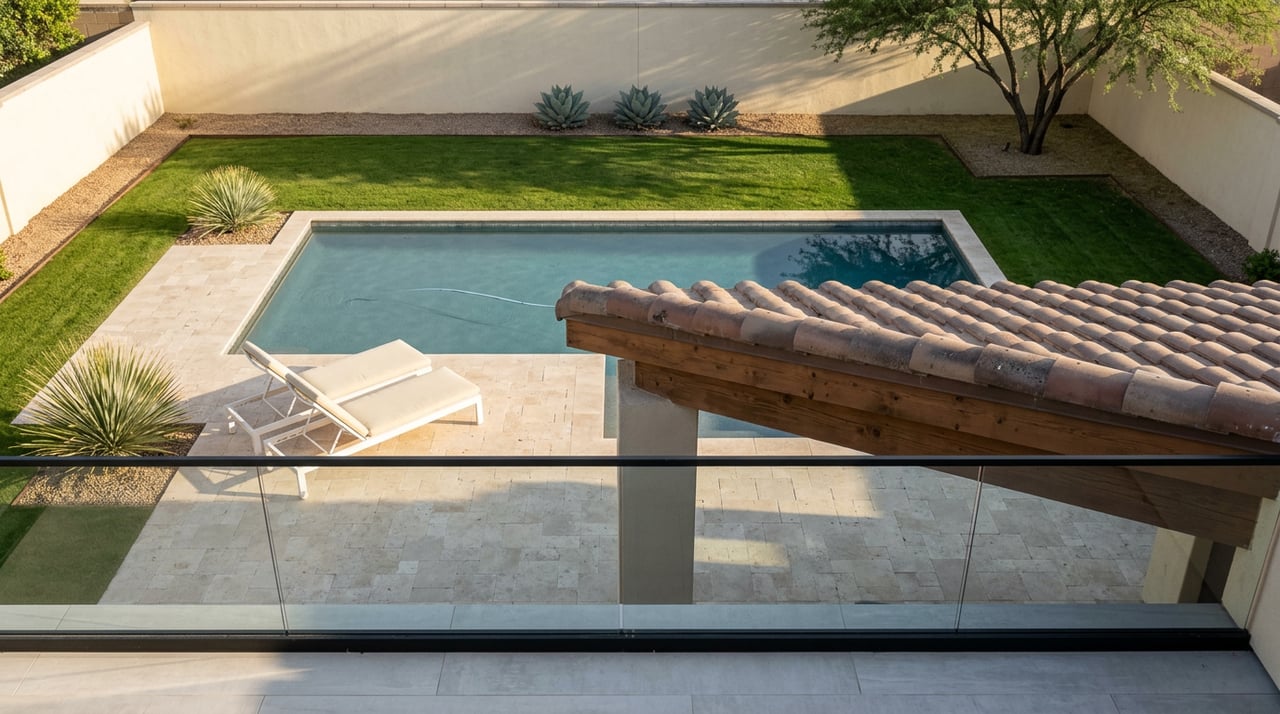
A buyer working with our team this month is under contract on a home in Desert Highlands. Nothing unusual about the price, the inspection, or the timeline. What makes this particular file worth watching is a single date on the calendar that has nothing to do with the purchase contract at all: September 1, 2026. If escrow closes before that date, the buyer inherits a club membership priced at $205,000. If it slips past, the same membership costs $250,000. Same house. Same buyer. A $45,000 swing decided entirely by which side of a date the paperwork lands on.
That is the kind of detail a median price never tells you, and it points to something buyers evaluating golf-community homes across Scottsdale consistently get wrong: they compare initiation fees the way they compare list prices, as if the number on the sheet describes the same product from club to club. It does not.
What Changes on September 1
Desert Highlands is raising its membership initiation fee from $205,000 to $250,000, effective September 1, 2026. The club has confirmed that any purchase already in escrow as of that date will be grandfathered in at the lower fee. The trigger is escrow status, not closing date and not offer date. A buyer who opens escrow on August 30 and closes in October still qualifies for $205,000. A buyer who opens escrow on September 2 does not, regardless of how strong the offer was.
That mechanic matters because Desert Highlands runs one of the more buyer-friendly transfer structures in Scottsdale's golf-club landscape. Every membership there is tied to the home itself. There is no waitlist, no separate club application layered on top of the real estate closing, and no gap between the day you own the house and the day you have full golf, dining, and fitness access. The club has also just finished a restoration of its Jack Nicklaus Signature course and updates to the clubhouse, which is part of why the fee is moving toward parity with the roughly $250,000 initiation fees already in place at DC Ranch, Mirabel, and Desert Mountain.
The Fee Is Not the Product
Here is the part that gets missed when buyers build a shortlist off a comparison chart of initiation fees. That number is not one instrument across clubs. It is at least four different ones, and the differences change what you are actually agreeing to when you write an offer.
At Desert Highlands, the fee buys a membership that rides with the deed, automatically, on closing day. At DC Ranch, the golf initiation fee is market-based and updates monthly rather than annually, so the number quoted in June may not be the number quoted in September, independent of anything the buyer negotiates. At Desert Mountain and Silverleaf, the fee is fixed for the calendar year, resets every January, and requires property ownership as a precondition of eligibility, which means the membership and the closing are two separate approval processes running on two different clocks. At Troon North, the structure is semi-private rather than fully private, outside play is permitted on the club's two Tom Weiskopf-designed courses, and the buy-in sits far below any of the fully private clubs.
A single comparison makes the point clearer than a paragraph can:
| Club | 2026 Golf Initiation Fee | How the Membership Transfers |
|---|---|---|
| Desert Highlands | $205,000, rising to $250,000 on September 1 | Automatic with the deed, no waitlist |
| DC Ranch | Market-based, updated monthly | Fixed clubhouse fee plus a fluctuating golf initiation tied to demand |
| Desert Mountain | $250,000 (Full Golf) | Requires property ownership; annual reset each January |
| Silverleaf | $500,000 | Requires property ownership; by invitation |
| Troon North | Semi-private, lower buy-in than fully private clubs | Membership independent of home purchase; outside play permitted |
Two homes priced identically in two different golf communities can carry entirely different total costs, entirely different approval timelines, and entirely different amounts of certainty about what the buyer will actually pay, purely because of which mechanic sits behind the fee.
Why the Carrying Cost Matters More Than the Number on the Sign
The initiation fee is also just the entry point. Once you own the membership, the annual carrying cost, which combines monthly dues, food and beverage minimums, and periodic capital assessments, can run anywhere from under $15,000 a year to well over $50,000 depending on the club. Desert Mountain's published 2026 dues schedule sets golf membership dues at roughly $2,472 a month plus a $2,500 annual food and beverage minimum, before any capital assessment tied to course or clubhouse improvements. A club with a lower sticker price at the door can still cost more to live inside if its dues and assessments run higher, which is exactly why the initiation fee alone is a poor way to rank communities against each other.
This is the piece that rarely makes it into a listing conversation. A buyer comparing a $250,000 initiation fee at one club against a $500,000 fee at another is really comparing two different financial products with two different repricing schedules and two different sets of ongoing obligations, not two versions of the same purchase.
A golf membership fee looks like a price tag. Depending on the club, it behaves like a deed restriction that transfers automatically, a subscription that resets every January, or a market instrument that reprices monthly regardless of anything in your purchase contract.
What to Ask Before You Write the Offer
Before a buyer submits paperwork on a golf-community home, we walk through a short list of questions that has nothing to do with the house and everything to do with what happens after closing:
- Does the membership transfer automatically with the deed, or does it require a separate club application and interview process?
- Is the initiation fee fixed for the year, or does it reset on a schedule, such as DC Ranch's monthly update or the January resets common at most other clubs?
- Who is contractually responsible for the initiation or transfer fee, the buyer or the seller, and is that spelled out in the purchase contract or left to a separate side agreement with the club?
- What is the full annual carrying cost, including dues, food and beverage minimums, and any pending capital assessments, not just the number quoted at initiation?
- If the home requires ownership as a precondition for club eligibility, as it does at Desert Mountain and Silverleaf, how long does the club's own approval process typically take relative to the real estate closing timeline?
None of these questions show up on a standard property disclosure. They live inside the club's own membership packet, and getting answers before the offer is written, rather than after escrow opens, is what keeps a buyer from discovering a $45,000 gap the week before closing.
A Few Questions We Hear Often
Does every home in a Scottsdale golf community require a club membership? No. Some communities make golf membership mandatory for all homeowners, while others, including semi-private clubs like Troon North, sell memberships independently of any home purchase. Confirming which model applies to a specific address is part of due diligence before writing an offer.
Can a buyer negotiate who pays the initiation fee? It can be negotiated as part of the purchase contract, but it has to be addressed explicitly. Absent language in the contract, the obligation typically defaults to whatever the club's own membership rules specify, which varies by community.
What happens if my escrow opens before September 1 but closes after it? Based on Desert Highlands' current terms, the grandfathering is tied to escrow being open by September 1, not to the closing date itself. A buyer already in escrow by that date keeps the $205,000 fee even if the closing occurs later in the fall.
If you are evaluating homes in Desert Highlands, DC Ranch, Desert Mountain, or any of North Scottsdale's other private club communities, the membership structure attached to a specific address can matter as much as the home's price. The Bob Nathan Team AZ has spent decades working inside these communities and can walk you through what a given club's transfer terms actually mean for your timeline and your total cost before you write an offer. Request a private consultation to talk through the specifics of your search.