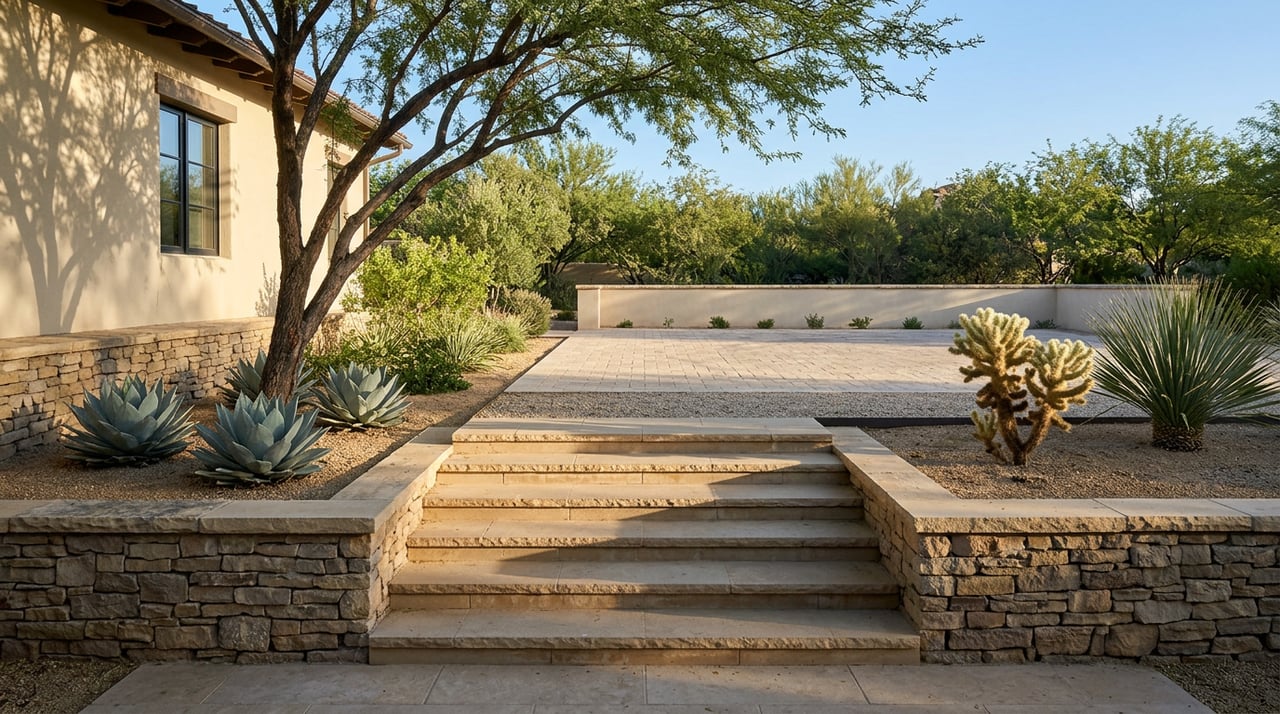
Two homes go under contract in Paradise Valley the same week, at nearly the same price, with buyers who both bring cash and a 30-day close written into the offer. One closes on schedule. The other stretches past 70 days, and the holdup has nothing to do with financing or negotiation. It has to do with what sits underneath the yard and how steep the lot is.
Escrow officers who work this town regularly will tell you the same thing: Paradise Valley does not run on one closing timeline. It runs on several, and which one applies to your file depends on the address, not the price tag.
Same Town, Four Different Water Bills
Buyers coming from a standard Phoenix or Scottsdale subdivision arrive with an assumption that does not hold here. They expect one utility to call. Paradise Valley splits water service among four separate providers, and which one serves a given house depends on where that house sits inside town lines.
| Utility type | Providers serving Paradise Valley |
|---|---|
| Water | Berneil Water Company, City of Phoenix Water Services, City of Scottsdale Water Services, EPCOR Water Company |
| Sewer | City of Phoenix (southwest and northwest portions), Town system operated under an intergovernmental agreement with the City of Scottsdale (remaining areas) |
That split matters at closing because title companies, lenders, and buyers all need a confirmed answer on which provider serves the property before they can close the file with any confidence. And the Town's own utility page is direct about the third possibility many buyers do not expect at all: a meaningful share of homes in Paradise Valley connect to neither sewer network. They run on private septic systems instead, simply because the lot predates municipal service or sits too far from a line to make connection practical.
That third category is where the real timeline risk lives.
The Six-Month Countdown Hiding in Every Septic Disclosure
Arizona law does not leave septic disclosure to custom or good faith. Under Arizona Administrative Code R18-9-A316, anyone selling a property served by a conventional or alternative onsite wastewater system must retain a qualified inspector to complete a transfer-of-ownership inspection within six months before the property changes hands. The inspector produces a formal Report of Inspection, and the seller has to hand that report to the buyer before the transfer closes.
The report does not have to be filed with the Arizona Department of Environmental Quality. It exists purely as a disclosure between the two parties in the transaction. But the clock on it is real, and it runs in one direction only. A seller who orders the inspection the week they list, expecting a 45-day escrow, has built in a comfortable margin. A seller who waits until an offer is signed has compressed that same six-month allowance into whatever time is left on the contract.
The paperwork does not end at the closing table either. According to Maricopa County, once the sale is final, the buyer has to file a Notice of Transfer with Maricopa County within 15 calendar days, along with a $50 fee, for that specific parcel.
None of this shows up on a listing sheet. It shows up in escrow, usually around day 20, when someone asks where the inspection report is.
When the Lot Itself Needs Its Own Permit Track
Significant portions of Paradise Valley sit on ground the Town classifies as hillside, meaning a slope of 10 percent or more, as described in the Paradise Valley Hillside Development Requirements. That classification triggers Article XXII of the Zoning Ordinance and a standing Hillside Building Committee, whose stated job is to "review new construction applications for adherence to the Hillside Code," covering land disturbance, grading, drainage, lighting, and building materials before a permit can move forward.
Sellers preparing a hillside home for market often discover this mid-preparation rather than before it. The Town's own permit checklist for hillside-designated property calls for a construction staging and traffic plan, a form of financial assurance or performance bond, a right-of-entry and temporary construction easement agreement, and a staked, photographed plan showing the exact limits of disturbance.
That is the second timeline a Paradise Valley seller can run into without warning. It has nothing to do with septic or utilities. It is triggered purely by grade, and it can add real weeks to the preparation phase before a home is even ready to photograph, let alone list.
What This Actually Means for the Calendar
Put the pieces together and a pattern emerges that explains why two nearly identical Paradise Valley homes can close on very different schedules. A property on town sewer, on flat ground, with clean utility records, can move through the standard Arizona resale calendar without much friction. In our experience guiding these transactions, that means the escrow, appraisal, and loan contingency phases most Valley buyers expect, landing somewhere in the usual 30 to 45 day range for a financed purchase.
Add a septic system, a hillside lot, or both, and the honest range shifts to 60 to 90 days once the inspection window, any required repairs, and hillside documentation are folded into the schedule. That is not a sign anything has gone wrong. It is simply what this town's own rules require, and a seller or buyer who plans for it from day one rarely feels the delay at all. The ones who feel it are the ones who assumed Paradise Valley worked like everywhere else in the Valley.
A Few Questions We Hear Often
Does every Paradise Valley home have a septic system? No. Coverage depends on which part of town the property sits in. Some areas connect to City of Phoenix sewer, others to the Town's system operated through an agreement with the City of Scottsdale, and many properties, particularly on larger and older parcels, run on private septic instead.
If I already had a septic inspection done last year, do I need a new one? The state's rule is tied to a six-month window before transfer, not a calendar year. An older report will not satisfy the requirement on its own once that window has passed.
Does a cash sale skip the Notice of Transfer filing? No. The filing requirement applies regardless of how the buyer finances the purchase.
Plan the Calendar Before You Need It
The homes that close on schedule in Paradise Valley are rarely the ones that got lucky. They are the ones where the septic inspection was ordered early, the utility provider was confirmed before the listing went live, and any hillside paperwork was already in motion before the first showing. If you are preparing to sell or planning an offer on a Paradise Valley property and want a realistic read on what your specific address requires, the Bob Nathan Team can walk through the calendar with you before it becomes a problem. Request a private consultation and let's map out your timeline together.
This article is general information, not legal, tax or financial advice. Consult a qualified professional about your situation.